Industrial Utility Efficiency

Technology

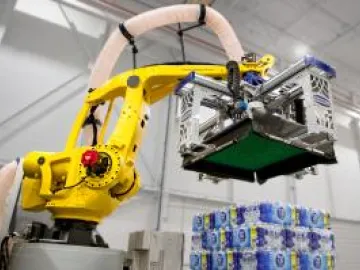
Suction rate, nozzle diameter, degree of evacuation, generator intelligence and air or energy consumption! These are only a few of the factors engineers need to consider when determining the best vacuum generation source for a custom-engineered gripping system. 

Continuing Education at the Best Practices 2021 EXPO & Conference

The EXPO & Conference focuses on “Optimizing On-site Utilities Powering Automation.” Experts from all over the world convened to discuss compressed air, pneumatics, motors and drives, vacuum, aeration blower and chiller/cooling and water treatment systems.

Held November 2-4, 2021, this 3rd installment of the event continued to provide continuing education, certification and networking opportunities to equipment sales engineers, engineering firm and manufacturing plant personnel.

Controlling DO: A Good Average Isn’t Good Enough

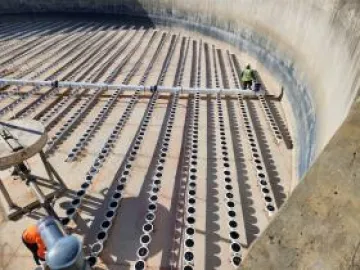
Most control systems use Proportional-Integral-Derivative (PID) algorithms for controlling DO, basin air flow distribution, and blower pressure or flow. These algorithms are prone to hunting - the cyclic fluctuation of the controlled variable. Fluctuations that oscillate the DO several mg/L above and below the target DO concentration are common.

Considerations for Temporary Blower Air at a Wastewater Treatment Facility

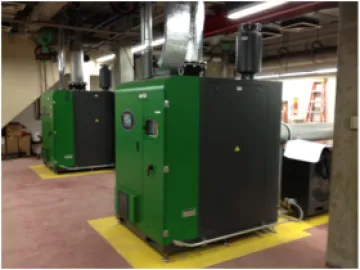
This article aims to discuss the various technologies of equipment that could be presented to a wastewater operator faced with a temporary need for blower air and to help the operator understand the impact (both monetarily through a “Total Cost of Rental” approach and environmentally) of their decisions.

Two Vacuum System Optimization Case Studies from Europe

By using state-of-the-art vacuum technology for degassing mineral water, it has been possible to save an average of 3,000 cubic meters of water per filling plant per year. The solution was to replace the existing liquid ring vacuum pumps with MINK claw vacuum pumps from Busch Vacuum Solutions.

Tea Packaging Quality Improved with Vacuum Conveying Upgrades

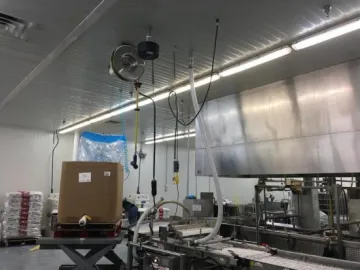
In an ongoing project to improve processes whenever and wherever it can, a global manufacturer of private label retail, food service and specialty brand teas, purchased an extension conveyor system to improve efficiency and ergonomics. Prior to implementing the extension conveyor, a vacuum conveyor system transferred raw materials into portable silos that workers rolled from one production machine to the next.

Aeration Blower Control Strategies

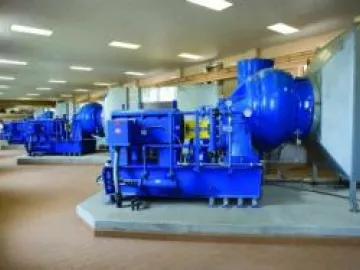
Real world blower applications rarely operate at steady state design conditions. There are a variety of reasons for this. Designs usually include a margin of safety to accommodate unforeseen conditions. Typically, the process demand itself is variable, requiring a corresponding ability to modulate the blower flowrate.

Case Studies in Dry vs. Wet Vacuum Pumps

We present a few case studies derived on real-world application examples, where various vacuum technologies may be suitable solutions. Each case is generalized enough that the knowledge is applicable across multiple specific applications.

Liquid Ring Vacuum Pumps and Food Applications

The food industries can have many messy processes, whether it is poultry evisceration, deboned waste conveying, bottling, or sugar cake filtration. Liquid ring vacuum pumps (LRVP’s) are often utilized as the backbone of these processes because they can handle the soft solids, debris, and particles that can easily get sucked into the vacuum pump. So how does a LRVP work, why does it work in these processes, and how to make sure they keep working?

Considerations for Sizing Vacuum Pumps in High Humidity Applications

Many of us are familiar with sizing vacuum pumps based on throughput, process pressure requirements, chamber size, pump down times, conductance and leakage. In a lot of cases, humidity becomes an afterthought and unexpected things happen. Some of these unexpected things we learn to live with, like emulsified oil. In other cases, the unexpected things prevent the pump from performing the job it was intended for. 

Design Engineering a WWTP Expansion with Unique Site Constraints

A small site located within a floodplain, prone to erosion, and currently occupied by an existing in-service wastewater treatment facility is not at the top of any engineer’s list for a desirable site to expand a wastewater treatment plant or reclamation facility. However, these challenges created opportunity for specialized solutions during the design of the facility expansion; in particular, in designing the aeration and digester blower system.

Aeration Blowers

Most-Open-Valve (MOV) control is a common automatic dissolved oxygen (DO) control system. By

Air Knives - Nozzles

Blower & Vacuum Best Practices interviewed Republic Manufacturing VP of Sales & Marketing,

Industrial Blowers

One of the most exciting technologies impacting the ability of end-users to optimize blowers at

Measurement

Every municipality and utility is facing the reality of rising energy costs. In 2010, the Town of

Medium/High Vac

The aerospace division of a large industrial manufacturer, uses a large altitude simulation chamber

Purification

In this article, we will isolate and review one system common to many plants and industries: the

Rough Vac

This article examines how industrial facilities can quantify the return on investment associated

Vac Generation

Know Your Vacuum Pump ApplicationKey Vacuum Pump Sizing TermsMoving Different Gasses with a Vacuum