Industrial Utility Efficiency

Technology

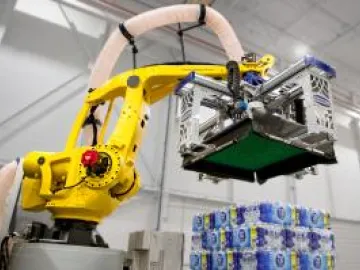
Suction rate, nozzle diameter, degree of evacuation, generator intelligence and air or energy consumption! These are only a few of the factors engineers need to consider when determining the best vacuum generation source for a custom-engineered gripping system. 

WWTP Saves Energy in Biogas Recovery Process

Ever since it was commissioned in 1974, the Echallens wastewater treatment plant in the Swiss canton of Vaud has been generating power from the recovery of biogas. In May 2020, two old oil-lubricated piston compressors used to mix the sludge in the digester were replaced by one MINK claw compressor from Busch Vacuum Solutions. This enabled the amount of power required for this process to be reduced by up to 40 percent. For the director of the treatment plant, this means he needs less energy to produce energy.

Optimizing Booster/Liquid Ring Vacuum Pump Performance with a Plastics Manufacturer

Wintek Corporation was contacted by a plastics manufacturing company in the summer of 2015 to evaluate their process vacuum capabilities. The customer was looking to replace a recently purchased used vacuum system to be used in a PET solid state polymerization/drying application. The process required high heat and vacuum and needed to run at 1 mBarA (0.75 Torr). The customer had purchased the dryer and accompanying vacuum system from an overseas supplier. While they were happy with the dryer, the vacuum system was not delivering the desired performance.

Select the Right Vacuum Pump

Deciding on the most suitable vacuum technology for an industrial application can be challenging. This decision can be relatively easy if it is simply finding a drop-in replacement for an existing pump, but if a process keeps crashing an existing pump, it can get complicated when you are tasked with re-evaluating all the available options to find the best solution. I am hoping to highlight a few key factors to consider when you run into this type of scenario.

Measuring Blower Airflow in the Field

Most electric utilities offer customer incentives for implementing energy conservation measures (ECMs) Incentive programs pay customers to use less energy. In some cases they are mandated by legislation and in others the incentives are driven by the utility’s desire to avoid building new generating capacity. Some incentives are based on reduced energy use (kWh) and some are based on lower peak demand (kW).

Three Different Sized Wastewater Treatment Plants Save Energy and Maintenance Costs with Aeration Blower Inlet Filter Upgrades

Optimized intake filters can save thousands of dollars annually in energy savings and may not require construction crews, engineering bids, or grant applications. The benefits can also be realized for treatment plants of all sizes. Described below are examples of three wastewater treatment plants that upgraded filters and came out ahead: a small rural operation with positive displacement (PD) blowers, a suburban plant using multi-stage blowers and a large urban plant that had already upgraded to airfoil bearing high-speed turbo blowers.

Blower Upgrade Saves Fraser Colorado Wastewater Treatment Plant Energy Costs

When the plant’s original aeration blowers became costly to operate and newer technology offered the promise of energy-savings, Fuqua took decisive action and replaced the older blowers with high-speed turbo blowers. As a result, the plant saves ratepayers approximately $30,000 per year in energy costs and bolsters the plant’s ability to maintain uptime and achieve extremely clean effluent.  

Versatile Vacuum Technology is a Force Behind Industrial Woodworking

There’s a lot of vacuum going on in the woodworking industry. From treatment to routing to handling, vacuum systems help meet the demands for higher speed performance, greater precision, faster production and better quality. Vacuum technology enhances the skills and talents of operators. Woodworking facilities of all sizes and production capabilities can precisely target their vacuum requirements to deliver maximum output. Here’s an overview of the most significant woodworking vacuum applications.

Madison Utilities Wastewater Treatment Plant Blower Upgrade Saves Energy

One need look no further than the treatment plant’s digester project upgrade to see the value of the plant’s forward-thinking approach at work. The upgrade involved the replacement of five Positive Displacement (PD) blowers with four, high-speed Inovair integrally geared blowers for aerating the digesters. With fewer – and smaller – blowers the plant saves tens of thousands of dollars in energy costs per year. The blowers also offer flexibility to cost-effectively adapt to the need for increased water treatment in the future. 

Positive Displacement Blower and Vacuum Booster Lubricants

You have your equipment, everything is set up and ready to run, but what about your lubricants? Too often, lubricants receive little attention with respect to their use in rotating equipment. Even the most reliable cars in the world will encounter problems on a short commute if the wrong transmission fluid is used during a flush. The same is true with your Positive Displacement (PD) blower or vacuum booster that operates around the clock. In our experience, approximately 80% of all bearing and gear failures are the result of improper lubrication.

Aeration Blowers

Most-Open-Valve (MOV) control is a common automatic dissolved oxygen (DO) control system. By

Air Knives - Nozzles

Blower & Vacuum Best Practices interviewed Republic Manufacturing VP of Sales & Marketing,

Industrial Blowers

One of the most exciting technologies impacting the ability of end-users to optimize blowers at

Measurement

Every municipality and utility is facing the reality of rising energy costs. In 2010, the Town of

Medium/High Vac

The aerospace division of a large industrial manufacturer, uses a large altitude simulation chamber

Purification

In this article, we will isolate and review one system common to many plants and industries: the

Rough Vac

This article examines how industrial facilities can quantify the return on investment associated

Vac Generation

Know Your Vacuum Pump ApplicationKey Vacuum Pump Sizing TermsMoving Different Gasses with a Vacuum