Industrial Utility Efficiency

Technology

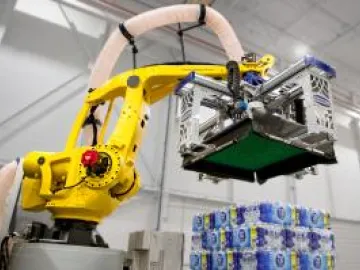
Suction rate, nozzle diameter, degree of evacuation, generator intelligence and air or energy consumption! These are only a few of the factors engineers need to consider when determining the best vacuum generation source for a custom-engineered gripping system. 

Industrial Sandblasting - Where Does All the Air Go?

“Sandblasting” is one of the oldest and most used methods of metal treatment. Various abrasive materials may be loaded manually or by a vacuum system pulling the “grit” from a storage tank. A control valve then operates with the compressed air (bypassing the vacuum pump), being forced into the tank pressurizing the receiver. When the high pressure compressed air goes out the discharge line, it pulls the appropriate amount of grit with it to effectively impinge against the targeted metal surface.

A View From India: Pneumatic Conveying of Bulk Materials

In thermal power stations, nuclear plants, and chemical and industrial plants, different types of bulk materials are used. The materials exist in different forms including lump, powder, granules, chips, and pallets. These bulk materials, in their different forms, require efficient and reliable material handling systems.

Energy Saving Opportunities in Blowoff Applications

Assessing payback on engineered air nozzle and blower upgrades

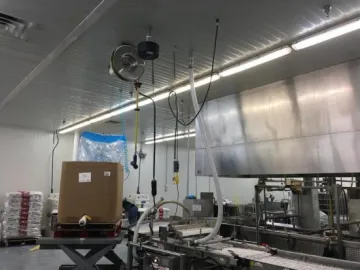
There are a variety of means factories can use to remove or “blowoff” moisture from a package. Open tubes or drilled pipe are often viewed as simple low-cost methods. However, there are considerable drawbacks to these approaches, most notably – increased operating expense. While they may be convenient and inexpensive in the short term, these approaches often cost 5-7 times more to operate than preferred alternatives.

A Kroger Company Bakery Saves Energy

Recently, The Kroger Company’s Indianapolis bakery identified the use of compressed air in a blow-off and conveyor gap transfer as a major source of energy loss and cost waste. According to the U.S. Department of Energy, “inappropriate use” of compressed air like blow-off produces high pressure atmosphere bleed leading to significant energy loss and unnecessary operational costs. Carrying a 10-15% efficiency return (according to the Department of Energy), compressed air applications can often be achieved more effectively, efficiently and less expensively with alternative solutions using a high flow rate and moderate pressure.

Water Treatment Plant Receives $1.7 million Energy Grant

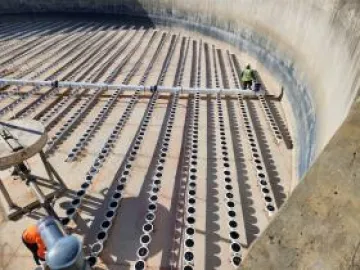
A new cogeneration system installed at the Budd Inlet Treatment Plant by the LOTT (Lacey, Olympia, Tumwater, and Thurston County) Clean Water Alliance late last year uses treatment by-products as fuel to generate electricity and heat energy. This renewable energy system, combined with an aeration blower retrofit currently underway at the Budd Inlet Treatment Plant, is expected to save LOTT more than $228,000 per year in utility costs.

Blower Advancements for the Wastewater Industry

"The Numbers Don’t Lie". It’s a popular saying everyone has heard before, applied to a variety of situations – political statistics, figures backing up an athlete’s performance and budget data.

Thirty percent is a big number. Applied to the above scenarios, it could entail a landslide victory or a hitter gaining entry into the Baseball Hall of Fame. But just imagine, if the manager of a wastewater treatment facility were to trim 30 percent from their operating costs, he or she might also consider that a landslide victory of their own.


Soft Drink Bottler Saves Energy With Blowers

A leading soft drink bottling manufacturer’s compressed air needs were threatening to exceed its Michigan plant’s compressed air capacity. Faced with the cost of buying a new compressor, the soft drink bottling manufacturer re-assessed their compressed air use to identify compressor and energy savings opportunities. In the audit, the soft drink bottling manufacturer identified the use of compressed air in a gap transfer as a source of compressed air and energy inefficiency.

An Introduction to WAGD System Implementations

This article will examine in detail four of the five acceptable WAGD implementations under NFPA 99, along with some alternative ways they may be implemented. This article will not deal with passive implementations.

The Ins and Outs of Vacuum Generators

There is an enormous population of vacuum generators being used successfully by industry. Applications range from pick & place to vapor extraction to bulk material handling and the number of installations is growing. Before proceeding with an installation utilizing these devices, there are two general issues to consider: efficiency and appropriateness.

Profile Dekker Vacuum

The roots of our company start with my father, Jan Dekker, who was heavily involved with oil-sealed liquid ring vacuum systems used in the gold mines of South Africa. This was in the mid-1970’s when gold prices were going up. Vacuum systems (in the mines) were optimized by improving vacuum levels using oil instead of water and by adding vacuum boosters.

Aeration Blowers

Most-Open-Valve (MOV) control is a common automatic dissolved oxygen (DO) control system. By

Air Knives - Nozzles

Blower & Vacuum Best Practices interviewed Republic Manufacturing VP of Sales & Marketing,

Industrial Blowers

One of the most exciting technologies impacting the ability of end-users to optimize blowers at

Measurement

Every municipality and utility is facing the reality of rising energy costs. In 2010, the Town of

Medium/High Vac

The aerospace division of a large industrial manufacturer, uses a large altitude simulation chamber

Purification

In this article, we will isolate and review one system common to many plants and industries: the

Rough Vac

This article examines how industrial facilities can quantify the return on investment associated

Vac Generation

Know Your Vacuum Pump ApplicationKey Vacuum Pump Sizing TermsMoving Different Gasses with a Vacuum