Industrial Utility Efficiency

Wastewater

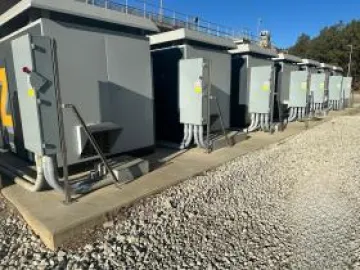
In a strategic move to enhance environmental sustainability and operational efficiency, Universal Compressed Air (UCA) partnered with a leading waste services provider in the Southeast to design, build, own, operate and maintain a state-of-the-art blower System for wastewater pond aeration. This innovative solution, part of a five-year agreement, delivers over 20,000 scfm of low-pressure air while guaranteeing uptime, performance and significant cost savings.

GE Water Introduces and Tests New Membrane Aerated Biofilm Reactor Technology

With the energy used by water and wastewater treatment plants in the United States accounting for 35 percent of a typical local government’s energy budget, GE formally introduced its new ZeeLung* Membrane Aerated Biofilm Reactor (MABR) technology that is four times more energy efficient than existing aeration systems. Aeration for biological treatment is the largest energy consumer in a wastewater treatment plant, typically representing 60 percent of a facility’s power usage.

Turbo Blowers Generate Significant Energy Savings at Victor Valley Wastewater

A replacement strategy for air compressors and blowers integrated into a system-level approach towards energy efficiency can deliver significant energy savings and optimize equipment performance. At the Victor Valley Wastewater Reclamation Authority, a blower replacement project yielded annual energy savings of more than 928,000 kWh and $98,000 in energy costs, while improving the reliability of its secondary treatment process. In addition, the agency qualified for important incentives from its electric utility — significantly improving the project economics and resulting in a 2.94-year payback.

Pneumatic Control in Modular Wastewater Treatment Plants

The design of wastewater treatment plants is changing, and it has something to do with LEGO® bricks. More specifically, it has to do with how large and complex LEGO structures are built. If you follow the instructions carefully, you build module after module, eventually piecing them together to create a fully functional and cohesive unit.

PTFE Membrane Bubble Diffusers Reduce Demand on Aeration Blowers

Aeration tanks use bubble diffusers to distribute oxygen within the wastewater. Fine bubble diffusers, or those that produce a large amount of very small air bubbles, first began to become popular in the 1980s, as they had a much higher efficiency than coarse bubble diffusers. Fine bubble diffusers generally feature a membrane that allows airflow to pass from the piping system on the floor of the tank through the body of the diffuser and the membrane, providing oxygen into the wastewater for treatment.

Blower System Integration for Wastewater Aeration Applications

The overall wastewater treatment process is complex, and each step is integral to ensuring water is properly purified. Effluent ends up in the plants, containing substances that must be removed before the water can be properly cleaned and returned for use. The range of potential contaminants is almost endless and can include food, pulp, waste, or other substances. Afterwards, the water requires further scrubbing, with the aid of bacteria. It is in this part of the process that compressed air (ideally provided by energy-efficient rotary lobe blowers) plays a vital role.

APG-Neuros Retrofits San Bruno Aeration System with New Turbo Blowers

A facility audit examined the plant electrical energy consumption to find ideas to reduce plant energy use while meeting the process demand. Based on discussions with plant staff and a brief review of the process, it was decided to focus the effort on reducing the electrical energy required to provide aeration air to the secondary activated sludge process. The aeration air blowers were the largest consumers of electrical power in the plant and significantly less efficient than the newer blowers that have been introduced to the market place in the recent years.

The CAGI Low-Pressure Blower Standards BL 5389 and BL 300

Industrial standards provide a common means of understanding and communicating performance. This article examines the rationale and applications of the Compressed Air & Gas Institute’s standards for determining the energy efficiency of low-pressure blower packages.

How To Select The Most Effective Blower Technology for Wastewater Applications

This guide explains three blower technologies and,using examples from actual wastewater plants, describes the most effective technology for particular applications and why. Of course there is no substitute for a consultation specific to your application; however, the guide can help raise the right questions and ensure a productive vendor and technology evaluation process.

High Speed Bearing Technologies for Wastewater Treatment Applications

High speed bearing technology is applicable for aeration blowers operating at much higher speeds than the typical 60Hz, 3600RPM for cast multistage units. High Speed Turbo (HST) units are usually single stage (though some utilize multiple cores) and rotate from 15,000 to 50,000RPM. At such high speeds, standard roller bearings cannot offer the industry standard L10 bearing life. Two types of bearing technologies have come to dominate the wastewater treatment market for these types of machines: airfoil and magnetically levitated. Often the two technologies are compared as equals, however, in many significant ways they are not.

Kaeser Rotary Screw Blowers for Wastewater Aeration

Blower & Vacuum Best Practices interviewed Frank Mueller (President) and Stephen Horne (Blower Product Manager) from Kaeser Compressors.

Kaeser Compressors continues to grow both in the U.S. and internationally. We currently employ approximately 4800 people globally. In order to support the demand and maintain our superior quality and quality service levels, we continue to invest in people, facilities and technology.