
Industrial Utility Efficiency

Wastewater

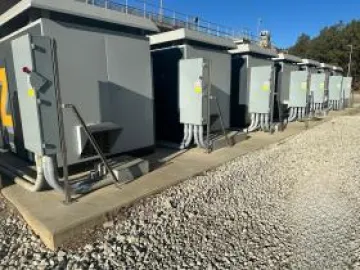
In a strategic move to enhance environmental sustainability and operational efficiency, Universal Compressed Air (UCA) partnered with a leading waste services provider in the Southeast to design, build, own, operate and maintain a state-of-the-art blower System for wastewater pond aeration. This innovative solution, part of a five-year agreement, delivers over 20,000 scfm of low-pressure air while guaranteeing uptime, performance and significant cost savings.

Proper Blower System Design for Variable Wastewater Depth Processes

Most blower applications for wastewater treatment are for conventional activated sludge aeration. The water level is typically constant, and pressure variations are usually less than one psi. There are other applications, however, that undergo significant variations in water level. These processes present challenges, but they can be accommodated with proper blower system design.

Blower Requirements with DO Control

The capacity and pressure requirements of blowers in a Water Resource Recovery Facility (WRRF) are determined by the aeration system. When systems are manually controlled blowers often operate at constant flow and pressure day in, day out. When the aeration system is automatically controlled to maintain a set dissolved oxygen (DO), however, the blower’s flow and system pressure vary constantly. Understanding these variations will help designers and suppliers optimize blower performance.

Busch Provides Reliable Oxygen Supply to Aeration Tanks

The Wastewater Association of Rheinfelden-Schwörstadt operates the wastewater treatment facilities in Schwoerstadt and Rheinfelden-Herten, Germany, as well as several rainwater overflow basins. This wastewater treatment facility now satisfies the highest requirements, and with a population of about 47,000, has reached a size that also guarantees sufficient disposal capacity for future generations.

Aeration Blower Turndown

Blower efficiency is a justifiable concern during the design and selection of aeration equipment. However, efficiency may not be the most important consideration in aeration blower applications. In many cases the blower with the highest efficiency will not provide the lowest energy consumption! Blower turndown is a parameter that is generally more important than efficiency in optimizing energy use.

Howden Roots DO Control System Optimizes Bird Island WWTP

Bird Island Wastewater Treatment Plant (WWTP) in Buffalo, N.Y., had an inefficient aeration control system that, ironically, had been installed in 1998 as an efficiency upgrade. The operating principle was that air flow to all 32 of the plant’s aeration basins, or zones, would be properly controlled by an average of several Dissolved Oxygen (DO) level measurements taken by DO probes in a few of the basins. However, changes in tank loadings and physical dynamics, along with differences in oxygen transfer rates between diffuser grids, prevented a uniform air flow in the aeration zones.

Black & Veatch Specifications from Diffusers to Blowers - Part 1: The Demand Side - Diffusers and DO Control

Blower & Vacuum Best Practices Magazine interviewed Julia Gass, P.E and Patrick Dunlap, P.E. at the Black & Veatch offices in Kansas City during the summer of 2016. Ms. Gass is responsible for aeration blower specifications while Mr. Dunlap is a wastewater process engineer. We held a general discussion covering technologies impacting aeration blowers in wastewater treatment plants.

Aeration Blower Requirements

Aeration blowers receive a lot of attention from design engineers, suppliers, and end users. That is understandable since blowers account for more than 50 percent of the energy used in a typical wastewater treatment plant (WWTP). They represent “low hanging fruit” for energy conservation measures in wastewater treatment!

Atlas Copco Screw Blowers Save Small Town Big Energy

The wastewater treatment plant in the Town of Hurlock, Maryland provides service to approximately 2,100 residences. However, the majority of the water treated comes from a nearby poultry processing plant, giving the plant influent a high organic content. That is why the Town of Hurlock replaced its two million-gallon-per-day (MGD) lagoon plant with a 1.65 MGD four-stage activated sludge facility ten years ago. After construction was completed, operating costs of the new plant were significantly higher than before. This meant the town had to get creative in order to keep costs down for their ratepayers.

Sewage Treatment Plant Retrofits Diffusers to Cut Energy Consumption 50%

The Ilmajoki sewage treatment plant (STP) located in southern Finland was built in the mid-1970s during a boom of infrastructure construction. Over time, industrial presence in the Ilmajoki area grew, and the plant saw an increase in flow of industrial effluent—or liquid waste and sewage. As the amount of influent increased, the plant was no longer able to meet required performance criteria suffered from a severe lack of oxygen—particularly during peak loading times.

Hoffman & Lamson: Engineered-To-Order Multi-Stage Centrifugal Blowers

Hoffman & Lamson has been manufacturing multi-stage centrifugal blowers for a long time. Lamson was founded in 1880, and Hoffman was established in 1905. Now a single entity under the Gardner Denver Nash Division, the company has some serious resources to complement its 100-plus years of blower expertise.