Industrial Utility Efficiency

Wastewater

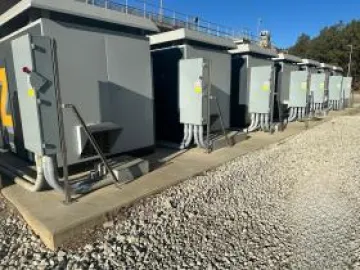
In a strategic move to enhance environmental sustainability and operational efficiency, Universal Compressed Air (UCA) partnered with a leading waste services provider in the Southeast to design, build, own, operate and maintain a state-of-the-art blower System for wastewater pond aeration. This innovative solution, part of a five-year agreement, delivers over 20,000 scfm of low-pressure air while guaranteeing uptime, performance and significant cost savings.

Remote Diagnostics for Water Filtration Systems

Productivity is more reliable when equipment can be monitored to detect incipient failures and take corrective action before the plant goes down. But many devices, such as analog control valves, pneumatic valve terminals and field sensors, often do not offer diagnostic feedback, or it is not being used. This white paper describes how this problem is being addressed, and includes an example of pneumatic valve terminals that can monitor, among other things, open load or coil currents at the specific valve and pressure inside the valve terminal.

DO Control System and Turbo Blowers Optimize Energy Use at a WWTF

Every municipality and utility is facing the reality of rising energy costs. In 2010, the Town of Billerica, MA, which is located 22 miles northwest of Boston with a population of just under 40,000 residents, engaged Process Energy Services and Woodard & Curran to conduct an energy evaluation of the Town’s Wastewater Treatment Facility (WWTF) and pump station systems sponsored by National Grid. The objective of the evaluation was to provide an overview of each facility system to determine how electrical energy and natural gas were being used at the facility and to identify and develop potential costsaving projects.

Screw Blowers and Membrane Bioreactor Treat Wastewater at a Bottling Plant

The right ingredients and processes are essential for manufacturing flavorful beverages that contribute to the company’s bottom line. But what happens to all those other “ingredients” that aren’t part of the recipe? Cleaning up those unwanted ingredients from bottling plant wastewater can consume large amounts energy, time and money—and become a distraction from the company’s primary goal of manufacturing beverages.

Improved Aeration Efficiency through Design and Control

With the recent and future increases of the cost of energy, operating a wastewater treatment plant (WWTP) as efficiently as possible has become one of the most important factors that operators and managers are facing today. The implementation of a properly designed aeration control system has been reported by the United Sates Environmental Protection Agency to reduce aeration energy by 25 to 40 percent.

Adaptive Control for Low Pressure Wastewater Treatment Air Systems

In recent years, there have been many changes in wastewater treatment. Most modern processes control three cycles: DO, NH4, and NO3, and all of the processes require high volumes of air. Undeniably, the low pressure air system uses more electrical power than the rest of the wastewater treatment plant combined. The blower packages in these systems can be equipped with low noise enclosures, fixed speed or variable speed drives, and can include all the instrumentation needed for self-protection.


Aeration Energy Offers Opportunities to Save

Aeration systems at wastewater treatment facilities present significant, cost-effective energy savings opportunities. Aeration—the introduction of air into the wastewater stream to support anaerobic bacteria and mixing—is a key function at the majority of wastewater treatment facilities in North America. Aeration accounts for 25-60 percent of total energy consumption at wastewater treatment facilities , and a significant piece of operating budgets sector-wide.

O₂ Automation: The Future of Bubble Mixing?

We have industrial accounts where we mix chemicals and acids. Our favorite is blending wine and spirits using compressed nitrogen. The old way to blend was to use “air rousing.” This was done by installing rows of perforated pipes in the bottom of the tank and attaching an air pipe to this grid. Since the typical mixing cycle was 45 minutes, copious amounts of air and energy were used.

Black & Veatch Provides Guidance to WWTP Design

Blower & Vacuum Best Practices® Magazine interviewed Ms. Julie Gass P.E., Lead Process Mechanical Engineer, from Black & Veatch on trends in the wastewater treatment industry especially pertaining to new technology aeration blowers and energy efficiency.

Aerzen Delta Hybrid Blower - Designed for Wastewater Treatment Plant Load Profiles.

The concept offers new possibilities for generating positive pressure or vacuum in a variety of applications. “By applying screw compressor technology to low-pressure air compression, we’ve greatly improved efficiency,” said Pierre Noack, President and CEO of Aerzen USA. The Delta Hybrid has seven patents or patent applications, making it one of the most innovative products in compression technology.