Industrial Utility Efficiency

System Assessments

As the Best Practices Magazines celebrate their twentieth anniversary, we wanted to take a moment to reflect on the remarkable system efficiency gains achieved since our first issue. We also wanted to give subscribers a peek at what the next decades might bring. To do this, we asked a hand-selected list of original equipment manufacturers, independent compressed air system sales and service companies, manufacturing plants and independent system auditors to share their thoughts, highlighting the changes they’ve seen over the past 20 years, then predicting what the next 20 years will bring.

The Future of Vacuum Automation for AMRs and AGVs

Autonomous Mobile Robots and Automated Guided Vehicles can automate receiving and unloading, picking, stacking, storing and even inventory management. However, there are challenges to powering these vehicles and their attachments. Because they are smaller and lighter, the size of components and the power they need to operate matters. Most AMRs and AGVs are battery operated, so it’s important to balance the need for high efficiency with also providing high levels of torque.

Six Steps to a Tailor-Made Vacuum Solution

Building a vacuum system solution is always a joint undertaking. Each solution aims to be compliant with location regulations, as well as to be reliable, energy-saving, sustainable and economical. An essential part of the process is including the customer and their requests during the planning process. There are six steps to find the optimum vacuum solution for the respective application.

Design Tips for Aeration Blower Rooms

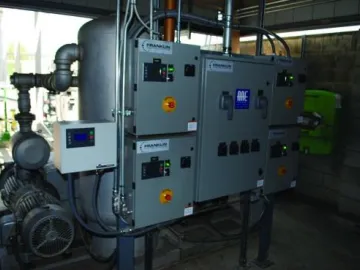
Supplying air to process equipment necessitates a system approach. Selecting the blowers is a critical design step, but far from the final one. The layout of the blower room and ancillary equipment is just as critical to project success as the blowers themselves.

Hygienic Vacuum Packaging for Cheese

Vacuum and protective gas both reduce the activity of oxygen-dependent microorganisms inside the packaging. This way, vacuum-packaged foodstuffs have a longer shelf life, even without preservatives. There are different types of vacuum packaging. When it comes to cheese, the type of vacuum packaging depends heavily on the specific type of cheese.

New Vacuum Solution Ensures Safe & Sustainable Tires at Continental

The new solution also saves close to 90 percent of the annual maintenance costs. The side channel blowers required intensive repairs and were therefore a source of high costs. MINK MV claw vacuum pumps provide completely dry compression of intake air and thus work without operating fluids such as oil or water. This makes the vacuum pumps virtually maintenance-free. 

Vacuum Upgrades Improve Operations at SupremeX

SupremeX, a Canadian based envelope and packaging manufacturer, with 11 facilities across six provinces, as well as five facilities in the United States, recently upgraded the vacuum system in their Winnipeg based plant. This article discusses the system before and after the changes, and the significant energy savings, plus improved system reliability that resulted. The company also captured a significant utility incentive to help with the cost of a new cutting-edge variable speed vacuum pump.

Measuring Blower Airflow Rates with Calibrated Ammeters

One definition of “calibrate” is “to determine, rectify, or mark the graduations of something”. An ammeter is an instrument for measuring electric current. Therefore the simple definition of a calibrated ammeter is a current measuring device marked with units of measure, presumably amperes. In the blower industry, however, the term has developed a specific meaning. A calibrated ammeter is an instrument that measures a blower motor’s current draw and converts the measurement to a display of blower airflow rate. 
 

Fresh Food and Clay Extrusion Vacuum System Case Studies

Vacuuming fresh food using chamber machines is often a daily activity in butcher shops, at fresh food counters for meat, sausage, and cheese products, as well as in the foodservice industry. All fresh foods contain more or less unbound water, which partially evaporates during vacuum packaging. This can influence the quality of the product. Furthermore, if the packaging machine is not permanently in operation, the packaging result may deteriorate, or the packaging process may take too long.

Centralized Vacuum System Evaluations: Part 1 Measurement

What is vacuum as used in the manufacturing/industrial sector? The clearest answer is – a contained space with gaseous pressures much less than surrounding atmospheric pressure. Atmospheric pressure (ATM) is expressed in many units of measure. At room temperature a cubic foot of contained air at sea level – the random movement and molecular impact on the walls of the containment vessel equal a force of 14.7 psia for every square inch of the walls.

Centralized Vacuum System Evaluations: Part 2 Audit Measures

Operating the vacuum system at higher levels (then necessary) affects the needed volumetric flow to compensate for leaks. This required compensation of volume (ACFM) must be added to the nominal production flow demand. The ambient air leak into the system will expand to the highest vacuum level, which is known as the “Expansion Ratio.”

Blow-off Air

A metal producer, in the Midwest, spends an estimated $2.4 million annually on electricity to

Blower Controls

The ideal blower control matches the blower airflow to the process demand. The process demand, in

Conveying

In open end pipe line suspension flow, or dilute phase pneumatic conveying, proper particle

Piping/Pressure Loss

Pressure/Vacuum

In this article, we’ll discuss some of the uses for receiver tanks for positive pressure systems

Vacuum Controls

In the world of semiconductor manufacturing, it’s an understatement to say peak productivity and

Vacuum Generation