Industrial Utility Efficiency

Industries

GE Water Introduces and Tests New Membrane Aerated Biofilm Reactor Technology

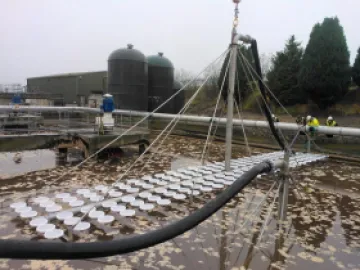
With the energy used by water and wastewater treatment plants in the United States accounting for 35 percent of a typical local government’s energy budget, GE formally introduced its new ZeeLung* Membrane Aerated Biofilm Reactor (MABR) technology that is four times more energy efficient than existing aeration systems. Aeration for biological treatment is the largest energy consumer in a wastewater treatment plant, typically representing 60 percent of a facility’s power usage.

Oerlikon Leybold Vacuum Supplies Vacuum Systems for University of Cologne

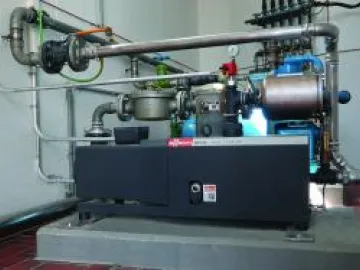
For the University of Cologne, the COPT.ZENTRUM is a central element of their technology transfer strategy from science to practice. Small- and middle-sized companies will benefit from the premises of the center, the technology, and the newest scientific findings in the field of organic electronics. Oerlikon Leybold Vacuum supplies the necessary vacuum technology.

Vacuum and Blower Technology at Process Expo 2015

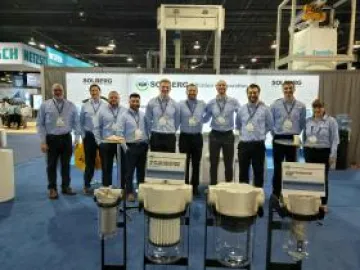
"The most impressive feature of this year’s PROCESS EXPO was the tremendous quality of customers in attendance," said Gil Williams, Chairman of the Food Processing Suppliers Association (FPSA) and President of Poly-clip System USA and Canada. “During the show we were able to meet with a number of important customers and sit down with prospects that we are confident will lead to new sales in the short to medium term, helping us close out 2015 on a strong note and jump start our sales efforts in 2016.”

Turbo Blowers Generate Significant Energy Savings at Victor Valley Wastewater

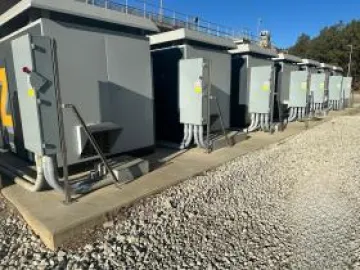
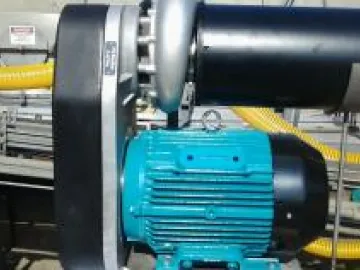
A replacement strategy for air compressors and blowers integrated into a system-level approach towards energy efficiency can deliver significant energy savings and optimize equipment performance. At the Victor Valley Wastewater Reclamation Authority, a blower replacement project yielded annual energy savings of more than 928,000 kWh and $98,000 in energy costs, while improving the reliability of its secondary treatment process. In addition, the agency qualified for important incentives from its electric utility — significantly improving the project economics and resulting in a 2.94-year payback.

Pneumatic Control in Modular Wastewater Treatment Plants

The design of wastewater treatment plants is changing, and it has something to do with LEGO® bricks. More specifically, it has to do with how large and complex LEGO structures are built. If you follow the instructions carefully, you build module after module, eventually piecing them together to create a fully functional and cohesive unit.

PTFE Membrane Bubble Diffusers Reduce Demand on Aeration Blowers

Aeration tanks use bubble diffusers to distribute oxygen within the wastewater. Fine bubble diffusers, or those that produce a large amount of very small air bubbles, first began to become popular in the 1980s, as they had a much higher efficiency than coarse bubble diffusers. Fine bubble diffusers generally feature a membrane that allows airflow to pass from the piping system on the floor of the tank through the body of the diffuser and the membrane, providing oxygen into the wastewater for treatment.

Blower System Integration for Wastewater Aeration Applications

The overall wastewater treatment process is complex, and each step is integral to ensuring water is properly purified. Effluent ends up in the plants, containing substances that must be removed before the water can be properly cleaned and returned for use. The range of potential contaminants is almost endless and can include food, pulp, waste, or other substances. Afterwards, the water requires further scrubbing, with the aid of bacteria. It is in this part of the process that compressed air (ideally provided by energy-efficient rotary lobe blowers) plays a vital role.

APG-Neuros Retrofits San Bruno Aeration System with New Turbo Blowers

A facility audit examined the plant electrical energy consumption to find ideas to reduce plant energy use while meeting the process demand. Based on discussions with plant staff and a brief review of the process, it was decided to focus the effort on reducing the electrical energy required to provide aeration air to the secondary activated sludge process. The aeration air blowers were the largest consumers of electrical power in the plant and significantly less efficient than the newer blowers that have been introduced to the market place in the recent years.

Sustainability at RR Donnelley

Sustainability at RRD starts with a philosophy. It is then executed through a global policy and objectives. RRD’s philosophy does not see sustainability as making a choice between being cost-effective and improving environmental impacts. On the contrary, sustainability represents integrating these two factors. This philosophy guides our sustainability objectives and strategies.

The CAGI Low-Pressure Blower Standards BL 5389 and BL 300

Industrial standards provide a common means of understanding and communicating performance. This article examines the rationale and applications of the Compressed Air & Gas Institute’s standards for determining the energy efficiency of low-pressure blower packages.

Food

From managing complex wastewater streams to protecting stored grain and sustaining fish health,

Wastewater

In a strategic move to enhance environmental sustainability and operational efficiency, Universal

Containers

Many manufacturing processes are like offensive linemen. When everything is running smoothly, nobody

Conveying

The 2023 International Powder and Bulk Solids Conference and Exhibition took place April 25-27, 2023

Woodworking

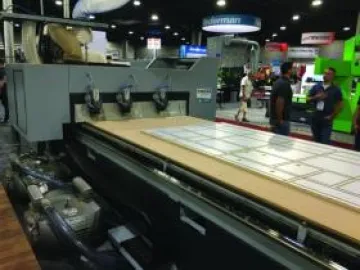
The IWF 2022 International Woodworking Fair was held August 23-26 at the Georgia World Congress

Biogas

Ever since it was commissioned in 1974, the Echallens wastewater treatment plant in the Swiss canton

Energy

Blower & Vacuum Best Practices interviewed Mr. Sid Van der Meer and Mr. Terry Nickel from