Industrial Utility Efficiency

Industries

Blower Advancements for the Wastewater Industry

"The Numbers Don’t Lie". It’s a popular saying everyone has heard before, applied to a variety of situations – political statistics, figures backing up an athlete’s performance and budget data.

Thirty percent is a big number. Applied to the above scenarios, it could entail a landslide victory or a hitter gaining entry into the Baseball Hall of Fame. But just imagine, if the manager of a wastewater treatment facility were to trim 30 percent from their operating costs, he or she might also consider that a landslide victory of their own.


Water Treatment Plant Receives $1.7 million Energy Grant

A new cogeneration system installed at the Budd Inlet Treatment Plant by the LOTT (Lacey, Olympia, Tumwater, and Thurston County) Clean Water Alliance late last year uses treatment by-products as fuel to generate electricity and heat energy. This renewable energy system, combined with an aeration blower retrofit currently underway at the Budd Inlet Treatment Plant, is expected to save LOTT more than $228,000 per year in utility costs.

Wastewater Best Practices: Austrian Wastewater Plant is a Net Producer of Energy

Did you know that wastewater contains ten times the energy needed to treat it? Located near Strass im Zillertal, the Strass wastewater treatment plant (WWTP) serves 31 communities in the Achental and Zillertal valleys east of Innsbruck, Austria. It provides wastewater treatment for a population that ranges from approximately 60,000 in the summer to 250,000 during the winter tourist season, and has treatment requirements that include organic and nitrogen removal. An energy-independent facility, the plant produces more electrical energy than it requires for its operation.


Soft Drink Bottler Saves Energy With Blowers

A leading soft drink bottling manufacturer’s compressed air needs were threatening to exceed its Michigan plant’s compressed air capacity. Faced with the cost of buying a new compressor, the soft drink bottling manufacturer re-assessed their compressed air use to identify compressor and energy savings opportunities. In the audit, the soft drink bottling manufacturer identified the use of compressed air in a gap transfer as a source of compressed air and energy inefficiency.

An Introduction to WAGD System Implementations

This article will examine in detail four of the five acceptable WAGD implementations under NFPA 99, along with some alternative ways they may be implemented. This article will not deal with passive implementations.

Inappropriate-Use Assessment Saves 1,881 scfm

This factory currently spends \$735,757 annually on the electricity required to operate the compressed air system at its plant. The group of projects recommended in the system assessment will reduce these energy costs by an estimated \$364,211 (49% of current use). Estimated costs for completing the recommended projects total \$435,800. This figure represents a simple payback period of 14.4 months.

Food

From managing complex wastewater streams to protecting stored grain and sustaining fish health,

Wastewater

In a strategic move to enhance environmental sustainability and operational efficiency, Universal

Containers

Many manufacturing processes are like offensive linemen. When everything is running smoothly, nobody

Conveying

The 2023 International Powder and Bulk Solids Conference and Exhibition took place April 25-27, 2023

Woodworking

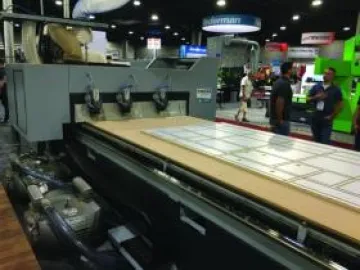
The IWF 2022 International Woodworking Fair was held August 23-26 at the Georgia World Congress

Biogas

Ever since it was commissioned in 1974, the Echallens wastewater treatment plant in the Swiss canton

Energy

Blower & Vacuum Best Practices interviewed Mr. Sid Van der Meer and Mr. Terry Nickel from