Industrial Utility Efficiency

Industries

Blow Molding Equipment: Review and Process Steps to Minimize Energy Usage

Stretch blow molding equipment requires a significant amount of energy—both compressed air and electrical—to produce bottles. Creating an effective and efficient process, as well as monitoring and maintaining optimal process settings, can result in significant energy cost reduction. These efforts will also help produce containers that meet all of the required quality standards.

MGM Industries Reduces Chilled Water Requirements with Dry Vacuum Pumps

Two years ago, sales were picking up and we began operating six extrusion lines on most days. We had to bring in some portable chillers, to keep up, and we started looking at buying a larger cooling system. We wanted to get rid of the portable chillers and have room to grow into four more extrusion lines. The new system we looked at was a 100-ton system that would have cost us around $150,000 in capital and installation and with a larger monthly electricity bill.

We were about to buy the new 100-ton chiller when our President, Abe Gaskins said, “Hold-on, can we replace the Liquid Ring pumps with something that doesn’t consume water”? That was our “Eureka!” moment.

Screw Blowers and Membrane Bioreactor Treat Wastewater at a Bottling Plant

The right ingredients and processes are essential for manufacturing flavorful beverages that contribute to the company’s bottom line. But what happens to all those other “ingredients” that aren’t part of the recipe? Cleaning up those unwanted ingredients from bottling plant wastewater can consume large amounts energy, time and money—and become a distraction from the company’s primary goal of manufacturing beverages.

Handling Corrugated Cardboard with Optimized Pressure-Regulation of Air-Driven Vacuum Pumps

Using suction cups and air-driven vacuum pumps is a preferable gripping and handling method of corrugated cardboard materials and boxes in carton-machines like case/carton erectors and rotary cartoners. Robot based applications, like palletizing and de-palletizing, are other examples where the best practice technology for gripping and handling is by suction cups and air-driven vacuum pumps.


Pneumatech® Biogas Dryers and ConservAir® Flow Controllers

Energy efficiency and sustainability solutions are often associated with more obvious initiatives--such as installing compact fluorescent bulbs—but those solutions fail to dig deeper for the “hidden gems” that can have a much greater impact. For manufacturing and building engineers or anyone else dealing with high potential energy consumption and inrush current demands, compressed air systems are one of the first places to look for significant energy savings and greater sustainability.

Improved Aeration Efficiency through Design and Control

With the recent and future increases of the cost of energy, operating a wastewater treatment plant (WWTP) as efficiently as possible has become one of the most important factors that operators and managers are facing today. The implementation of a properly designed aeration control system has been reported by the United Sates Environmental Protection Agency to reduce aeration energy by 25 to 40 percent.

Adaptive Control for Low Pressure Wastewater Treatment Air Systems

In recent years, there have been many changes in wastewater treatment. Most modern processes control three cycles: DO, NH4, and NO3, and all of the processes require high volumes of air. Undeniably, the low pressure air system uses more electrical power than the rest of the wastewater treatment plant combined. The blower packages in these systems can be equipped with low noise enclosures, fixed speed or variable speed drives, and can include all the instrumentation needed for self-protection.


Aeration Energy Offers Opportunities to Save

Aeration systems at wastewater treatment facilities present significant, cost-effective energy savings opportunities. Aeration—the introduction of air into the wastewater stream to support anaerobic bacteria and mixing—is a key function at the majority of wastewater treatment facilities in North America. Aeration accounts for 25-60 percent of total energy consumption at wastewater treatment facilities , and a significant piece of operating budgets sector-wide.

O₂ Automation: The Future of Bubble Mixing?

We have industrial accounts where we mix chemicals and acids. Our favorite is blending wine and spirits using compressed nitrogen. The old way to blend was to use “air rousing.” This was done by installing rows of perforated pipes in the bottom of the tank and attaching an air pipe to this grid. Since the typical mixing cycle was 45 minutes, copious amounts of air and energy were used.

Black & Veatch Provides Guidance to WWTP Design

Blower & Vacuum Best Practices® Magazine interviewed Ms. Julie Gass P.E., Lead Process Mechanical Engineer, from Black & Veatch on trends in the wastewater treatment industry especially pertaining to new technology aeration blowers and energy efficiency.

Food

From managing complex wastewater streams to protecting stored grain and sustaining fish health,

Wastewater

In a strategic move to enhance environmental sustainability and operational efficiency, Universal

Containers

Many manufacturing processes are like offensive linemen. When everything is running smoothly, nobody

Conveying

The 2023 International Powder and Bulk Solids Conference and Exhibition took place April 25-27, 2023

Woodworking

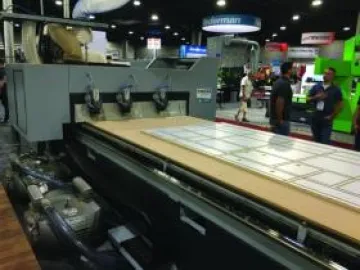
The IWF 2022 International Woodworking Fair was held August 23-26 at the Georgia World Congress

Biogas

Ever since it was commissioned in 1974, the Echallens wastewater treatment plant in the Swiss canton

Energy

Blower & Vacuum Best Practices interviewed Mr. Sid Van der Meer and Mr. Terry Nickel from