Industrial Utility Efficiency

Industries

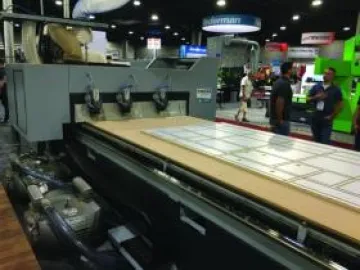
Furniture Maker Goes with Tri-Lobe Blowers

A large custom leather furniture manufacturer switches from rotary screw vacuum pumps to blowers for CNC router table hold down, and saves big on electricity, maintenance expenses and floor space.

Food Industry Factory Saves $154,000 in Annual Energy Costs

This food industry factory, located in California, was spending \$386,533 annually on energy to operate their compressed air system. This system assessment detailed eleven (11) project areas where yearly energy savings totaling \$154,372 could be found with a investment of \$289,540. A local utility energy incentive, paying 9 cents/kWh, provided the factory with an incentive award of \$159,778. This reduced the investment to \$129,762 and provided a simple ROI of ten months on the project.

Bottler Best Practices in California

Bottling companies and breweries, in California, are benefiting from a three-step system assessment process aimed at reducing the electrical consumption of their compressed air systems. The three-step process reduces compressed air demand in bottling lines by focusing on open blowing and idle equipment, and then improves the specic power (reducing the energy consumption) of the air compressors.

Aerzen Delta Hybrid Blower - Designed for Wastewater Treatment Plant Load Profiles.

The concept offers new possibilities for generating positive pressure or vacuum in a variety of applications. “By applying screw compressor technology to low-pressure air compression, we’ve greatly improved efficiency,” said Pierre Noack, President and CEO of Aerzen USA. The Delta Hybrid has seven patents or patent applications, making it one of the most innovative products in compression technology.

Compressed Air in Wastewater Treatment

The object of this article is to look at some very typical industrial water treatment processes and various compressed air and energy savings projects that have worked well for our clients over the years. The basic fundamentals with regard to compressed air usage are similar to municipal water treatment – a good starting point.

The Focus on Energy Water and Wastewater Program

The Focus on Energy Water and Wastewater Program was developed to support the industry because of the enormous potential to reduce energy use without compromising water quality standards. Through the program, numerous water and wastewater personnel have learned that energy use can be managed, with no adverse effects on water quality. Most locations that have saved energy have found improved control and treatment.

Improved Modified Atmosphere Packaging Technology

CVP System, Inc.’s MasterPACKer Eco+™ Breaks Down Barriers to Cost and Energy Savings Through Improved Modified Atmosphere Packaging Technology

Worldwide, Tesco, a global grocery and general merchandise retailer headquartered in Cheshunt, U.K., initiated the demand for modified atmosphere packaging technology in the early 70s. It became one of the first grocers to move away from employing an onsite butcher to using a central processing/distribution system.

A View From India: Pneumatic Conveying of Bulk Materials

In thermal power stations, nuclear plants, and chemical and industrial plants, different types of bulk materials are used. The materials exist in different forms including lump, powder, granules, chips, and pallets. These bulk materials, in their different forms, require efficient and reliable material handling systems.

Material Conveying with Pneumatic and Vacuum Systems

In many manufacturing operations, a very significant compressed air use is pneumatic conveying of many types of materials such as cement, fly ash, starch, sugar, salt, sand, plastic pellets, oats, feeds, etc. Often these are systems that use high-pressure air (100 psig class) reduced to lower pressures (15 psig, 45 psig). This creates an air savings opportunity.

A Kroger Company Bakery Saves Energy

Recently, The Kroger Company’s Indianapolis bakery identified the use of compressed air in a blow-off and conveyor gap transfer as a major source of energy loss and cost waste. According to the U.S. Department of Energy, “inappropriate use” of compressed air like blow-off produces high pressure atmosphere bleed leading to significant energy loss and unnecessary operational costs. Carrying a 10-15% efficiency return (according to the Department of Energy), compressed air applications can often be achieved more effectively, efficiently and less expensively with alternative solutions using a high flow rate and moderate pressure.

Food

From managing complex wastewater streams to protecting stored grain and sustaining fish health,

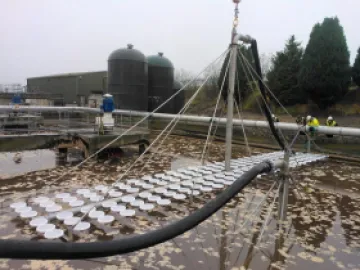
Wastewater

In a strategic move to enhance environmental sustainability and operational efficiency, Universal

Containers

Many manufacturing processes are like offensive linemen. When everything is running smoothly, nobody

Conveying

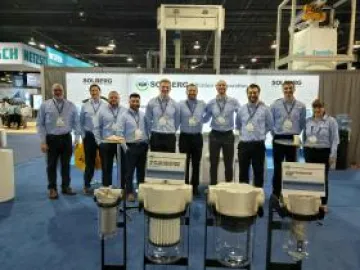
The 2023 International Powder and Bulk Solids Conference and Exhibition took place April 25-27, 2023

Woodworking

The IWF 2022 International Woodworking Fair was held August 23-26 at the Georgia World Congress

Biogas

Ever since it was commissioned in 1974, the Echallens wastewater treatment plant in the Swiss canton

Energy

Blower & Vacuum Best Practices interviewed Mr. Sid Van der Meer and Mr. Terry Nickel from